
Why Quitting Survivor Is Rarer Than You Think
Survivor quitters have gotten a lot of noise thrown at them over the years — some deserved, some not. But here’s what most casual fans miss: voluntary quitting is genuinely rare. Out of 700-plus players across more than 40 seasons, fewer than a dozen actually walked up to Jeff Probst and chose to leave. Everyone else you remember “going home” was either voted out, pulled for medical reasons, or removed by production. Saying the words out loud — choosing to quit — that’s a different animal entirely. A much rarer one. Which is exactly why these people are still being argued about years later.
The Survivors Who Walked Away Mid-Game
Osten Taylor — Survivor: Pearl Islands (Season 7)
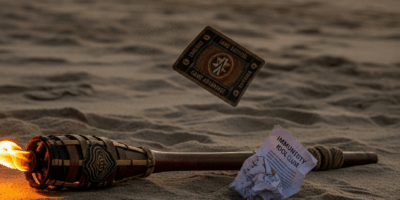
Osten Taylor became the first player in Survivor history to voluntarily quit — handing his unlit torch directly to Probst at Tribal Council in 2003 rather than having it snuffed. That detail matters. Probst looked genuinely irritated on camera, which isn’t something you see often from a host trained to keep his composure through 39 days of chaos.
What followed was quieter than most people remember. Osten stepped back from the Survivor universe almost immediately after Pearl Islands aired. A few post-show interviews, some acknowledgment that his body and mind had broken down out there — illness, dramatic weight loss, a general deterioration he hadn’t anticipated. Humiliated by the edit is probably an understatement. He never returned. No public “I wish I’d stayed” moment, either. More like a man who made a hard call and disappeared quietly into regular life afterward. That was 2003. We haven’t heard much since.
NaOnka Mixon and Purple Kelly — Survivor: Nicaragua (Season 21)
These two are almost always discussed together because they quit on the same episode — same Tribal Council, same season, which gave the whole thing an almost theatrical quality. NaOnka Mixon and Kelly Shinn, better known to fans as “Purple Kelly” for her near-total invisibility in the edit, both walked away from Nicaragua despite Probst offering their tribes a tarp and rice if they stayed. They declined. The tribe got nothing. Probst looked disgusted. The remaining players were furious. The internet had a lot of thoughts.
NaOnka is the more complicated figure. She’d already been one of Nicaragua’s most polarizing players — aggressive, entertaining to some, genuinely offensive to others. The quit added another layer to that. But she never really apologized for it in the years that followed. She acknowledged it wasn’t her proudest moment while also pushing back hard against the idea that she was weak. She talked about mental strain, about things cameras didn’t capture, and about having a real career — she was a physical education teacher at the time — that meant more to her than any game. Production allowed her to stay on the jury despite quitting, a decision that remains genuinely controversial among fans. People still argue about it on r/survivor.
Purple Kelly has been far less public about all of it. She gave some post-show interviews expressing real embarrassment and said she wished she’d pushed through. Of everyone on this list, she seems to carry the most visible regret.
Colton Cumbie — Survivor: Blood vs. Water (Season 27)
Colton is a unique case because he technically left twice. His first season — One World — ended in a medical evacuation that some fans believe he manufactured, though nothing was ever proven. In Blood vs. Water, he quit outright. Sobbing. Camera directly on his face. His partner Caleb Bankston stayed and competed without him. Probst, in a moment that’s been replayed on fan forums more times than anyone can count, essentially called Colton out on camera — accused him of not genuinely trying.
Probably should have opened with this section, honestly, because Colton’s post-show media presence is the most dramatic of any quitter’s aftermath by a wide margin. He gave interviews defending his decision, pushed back against Probst’s on-air assessment, and went back and forth publicly on whether he regretted any of it. He later said Probst’s words hurt him deeply. The relationship between them appeared genuinely strained for years. He hasn’t returned to the show since Blood vs. Water. Don’t make my mistake of assuming the story ended at Tribal — it didn’t, not for Colton.
Susan Hawk — Survivor: All Stars (Season 8)
Susan Hawk’s situation sits in a different category from the others entirely. She quit All Stars following a challenge incident involving Richard Hatch that she found violating and deeply upsetting. Her departure wasn’t about the game being too physically or mentally demanding — it was about feeling unsafe and disrespected in an environment that production had created and was responsible for.
Her post-quit interviews reflected that framing. She wasn’t apologetic. She was angry. She was critical of how production handled — or failed to handle — what happened, and she named it plainly. That directness earned her sympathy from a portion of the fanbase that the Nicaragua quitters never received. Over time, most people revisiting All Stars have moved toward a more empathetic read of her departure. What was once labeled “drama” now gets called something closer to what it actually was.
What the Show’s Producers Said About Quitters
Jeff Probst has addressed quitting more directly and more consistently than almost any other topic across his years of exit interviews and podcast appearances. His position — stated firmly and repeatedly — is that voluntarily leaving is a disservice to everyone who auditioned and didn’t make the cast. He’s framed quitting as a betrayal of the opportunity itself, not just the game.
In a 2010 exit interview following Nicaragua, Probst said he was “deeply disappointed” and made clear the show would reconsider whether quitters deserved jury seats going forward. Production reportedly updated its psychological screening processes in response. On his On Fire podcast, Probst has also talked about what quitting does to the remaining players — the kind of grief it creates in people who watch someone voluntarily leave a spot they’d have done almost anything to hold.
How Survivor Fans Responded Then vs. Now
The immediate reaction to most quitters — especially the Nicaragua pair — was brutal. Reddit threads from that era are unambiguous about it. NaOnka took a level of online criticism that went well past game analysis into personal territory. Purple Kelly was largely mocked. Osten received retrospective disdain once people started rewatching Pearl Islands with fresh eyes.
Time has softened some of it. Not all of it — NaOnka remains genuinely divisive on r/survivor, and threads debating her quit surface on a near-annual basis. But there’s a real shift in how newer fans engage with these moments. The mental health framing that barely existed in 2003 or 2010 is now central to how people discuss extreme competition television. Viewers who grew up watching The Challenge and Big Brother alongside Survivor tend to extend more understanding to contestants acknowledging their limits. That’s what makes Survivor endearing to us longtime fans, honestly — watching the conversation around it evolve even when the footage doesn’t.
Susan Hawk’s quit has been almost entirely reframed in recent years. Good.
Would Any of Them Play Again If Given the Chance
NaOnka has said in interviews she’d consider returning under the right circumstances — though no invitation appears to have materialized publicly, or at least none she’s confirmed. Colton expressed interest in a third chance for years after Blood vs. Water, but that door seems to have closed following his very public friction with Probst. I’m apparently in the minority thinking he deserved another shot, and the show’s casting decisions work for them while a Colton redemption arc never quite materialized.
Purple Kelly hasn’t publicly indicated any desire to return. Osten has been radio-silent on the topic for years — genuinely years. Susan Hawk has given no indication she wants anything to do with the show again, and honestly, that’s hard to argue with given her experience.
The honest reality is that most of these players carry the quit label permanently inside the Survivor fandom — regardless of what came before or after the moment itself. Whether that’s fair probably depends on how much grace you extend to people making hard decisions under conditions most of us will never face. Does the quit define the whole game, or is it just one moment out of many? Fans have been arguing about that one since 2003.


Leave a Reply