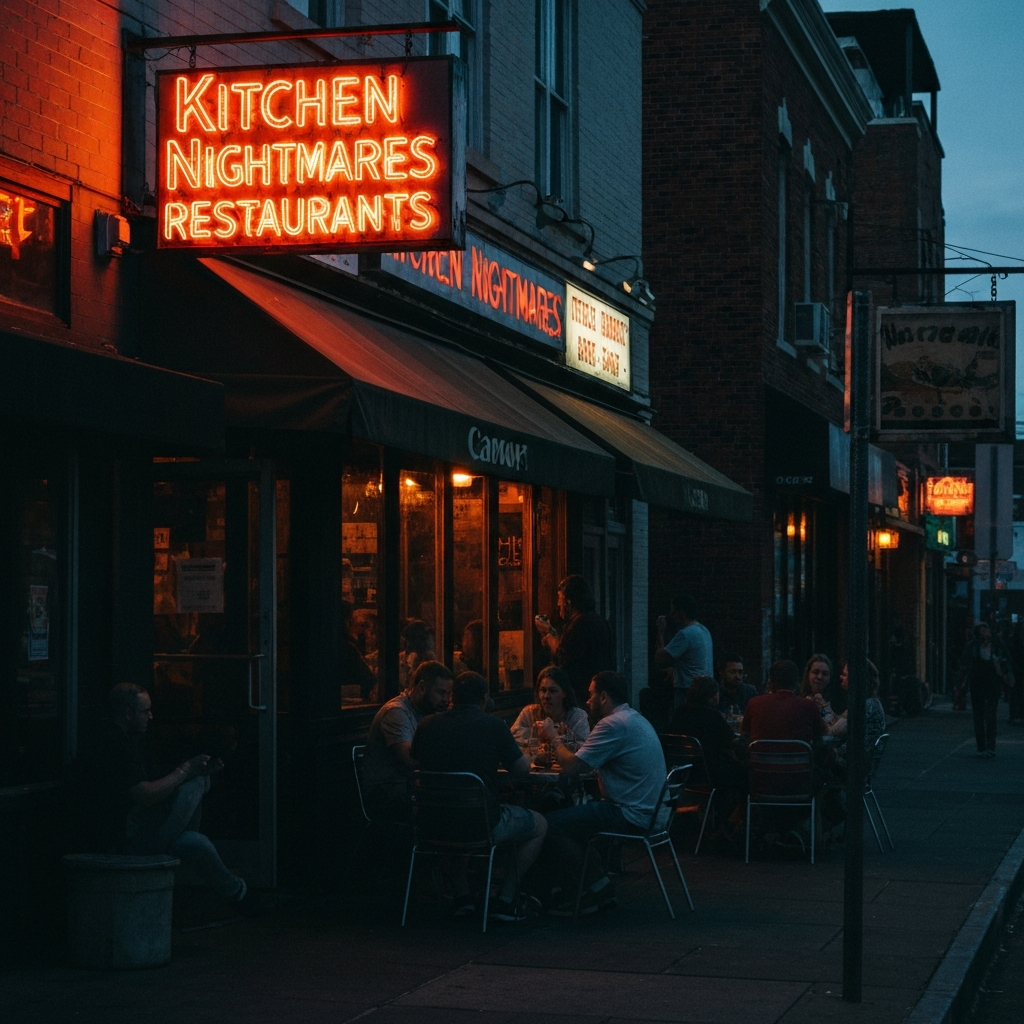
Gordon Ramsay’s Kitchen Nightmares ran for seven seasons in the US between 2007 and 2014, then came back in 2023 for seasons 8 and 9. In that time, he’s visited over 90 restaurants across America, screaming about raw chicken and dodgy walk-in coolers along the way.
But here’s the question everyone wants answered: did any of it actually work?
I’ve been tracking these restaurants since the show started. The numbers aren’t pretty, but they’re more nuanced than the simple “most of them closed” headlines you see floating around.
The Overall Numbers
As of early 2026, here’s where we stand:
From the original seven US seasons (2007-2014), roughly 16% of the restaurants are still open. That’s about 11 out of 70-something establishments. The rest closed at various points – some within months, others hung on for years.
The revival seasons are doing better so far. Season 8 (2023) has 4 out of 6 still operating, and Season 9 (2025) has 9 out of 10 still going. But it’s early – check back in two years and those numbers will probably drop.
Why Do So Many Close?
I spent years wondering if the show was somehow cursed. Turns out, the explanation is way more boring.
First, these restaurants were already failing before Kitchen Nightmares showed up. That’s literally the premise of the show. You don’t call Gordon Ramsay because business is great. By the time cameras arrive, most of these places are drowning in debt, dealing with equipment that should’ve been replaced years ago, and run by owners who are burnt out or in denial or both.
Second, a week of intense help doesn’t fix fundamental problems. Jon Taffer says this on Bar Rescue all the time – you can give someone the tools, but they have to use them. A lot of owners revert to old habits within months. They stop following the new menu. They let standards slip. They stop enforcing the systems that were put in place.
Third, sometimes the problems are unfixable. Bad location, not enough parking, changing neighborhood demographics, competition from chains – none of that goes away because a celebrity chef yelled at you on TV.
The Success Stories
But some places do make it, and their stories are worth paying attention to.
Pantaleone’s in Denver is the poster child. They were on Season 1 back in 2007, and they’re still serving Italian food today. Current reviews are solid – 4+ stars on Google, loyal regulars, the whole deal. What worked for them? The owners actually listened, implemented changes, and kept at it.
Yanni’s in Indianapolis is another survivor from the early seasons. They had family drama on the show – don’t they all – but managed to work through it. Still family-owned, still operating.
Luigi’s D’Italia is interesting because they had to relocate when their lease ended, but they reopened in a new spot and kept going. That takes real commitment.
What these success stories have in common: owners who took the criticism seriously, made real changes, and had enough financial runway to weather the transition period after filming.
The Dramatic Closures
Then there’s the other end of the spectrum.
Amy’s Baking Company is the obvious one – the episode so chaotic that Gordon Ramsay walked out. That’s never happened before or since. The restaurant became infamous, the owners became internet villains, and the whole thing imploded spectacularly. They lasted about a year after filming before closing.
Burger Kitchen in LA was another trainwreck – father-son conflict that somehow got worse after the show. The son accused the father of stealing his inheritance to fund the restaurant. They closed within months.
Mill Street Bistro, where the chef claimed he invented rap and argued with Gordon through the entire episode, shut down not long after airing. Sometimes you watch an episode and just know it’s not going to end well.
Patterns I’ve Noticed
After tracking this stuff for years, some patterns emerge:
The delusional owners almost always fail. Not the ones who are just stubborn or resistant to change – those sometimes come around. I mean the ones who genuinely believe they’re amazing and everyone else is wrong. If you can’t accept that your food has problems, you can’t fix your food.
Family restaurants with serious dysfunction rarely survive. The show might patch things up temporarily, but deep-seated family issues don’t resolve in a week.
Owners who are clearly exhausted and hate their lives often close voluntarily – and honestly, that’s sometimes the best outcome. Not every restaurant deserves to be saved. Some people are just done, and selling or closing lets them move on.
Newer restaurants have better odds than decades-old establishments. Less ingrained bad habits, more willingness to adapt, usually less debt.
The Bottom Line
Is Kitchen Nightmares effective? Depends how you define effective.
If the measure is “percentage of restaurants still open a decade later,” then no, not really. Most close. But most were probably going to close anyway – the show just documents the final chapter.
If the measure is “did the show give struggling restaurants a fighting chance they wouldn’t otherwise have,” then yes, absolutely. Some took that chance and ran with it. Others didn’t.
What the show can’t do is fix unfixable situations, change deeply ingrained behaviors, or magically erase six figures of debt. What it can do is provide a roadmap and a push. The rest is up to the owners.
I’ll keep updating these listings as information comes in. If you’ve visited one of these restaurants recently or know something I don’t, let me know.


Leave a Reply